Innovative
Cutting-edge Technology

Most people who notice their sight slipping arrive at the same conclusion on their own. The print has gone soft, headlights have a halo around them, and somebody in the family had a cataract at about this age — so it must be a cataract.
Often it is. But blurred vision is a symptom, not a diagnosis, and four quite different things produce it. Two of them are painless and slow, which is exactly why they get missed. The examination that tells them apart takes about twenty minutes and needs no preparation at all.

The lens inside the eye is clear when you are young and clouds slowly with age. As it clouds, light scatters instead of focusing, and the picture softens.
What people describe is rarely “blurred” at first. It is glare from oncoming headlights, a wash of light around street lamps, colours looking slightly faded or yellowed, and needing more light to read than they used to. One eye is often further along than the other, so the change creeps up — the better eye quietly covers for the other one until it can’t.
If that sounds familiar, what a cataract actually is covers the condition in full.
This is the one that worries us most, because of what it does not do. Glaucoma damages the optic nerve, and it begins at the edges of your vision rather than the centre. The brain fills in the missing parts so convincingly that people can lose a substantial amount of peripheral sight without noticing anything at all.
By the time glaucoma causes the kind of blur a person actually complains about, it is no longer early. There is usually no pain, no redness and no warning — which is why glaucoma has no warning signs is worth reading if anyone in your family has had it.
Glaucoma is found on examination, not by how the vision feels. That is the whole point of checking for it.
If you live with diabetes, the small blood vessels in the retina are affected long before your sight is. They can leak, swell and distort the central vision — and like glaucoma, the early stages produce no symptom you would notice.
Blur from diabetic changes often fluctuates. Vision is worse on some days than others, and it can shift with blood sugar levels, which leads people to assume it is tiredness or a bad week rather than something to have looked at.
This is why an eye check every year matters for anyone with diabetes, whatever their vision is doing.
The least alarming answer, and a common one. Eyes change with age. The focusing muscle stiffens through the forties and fifties, and a prescription that was right three years ago may simply be wrong now.
It is worth saying plainly: a good proportion of people who come in convinced they are losing their sight need a new prescription and nothing more. Finding that out is a good morning’s work.
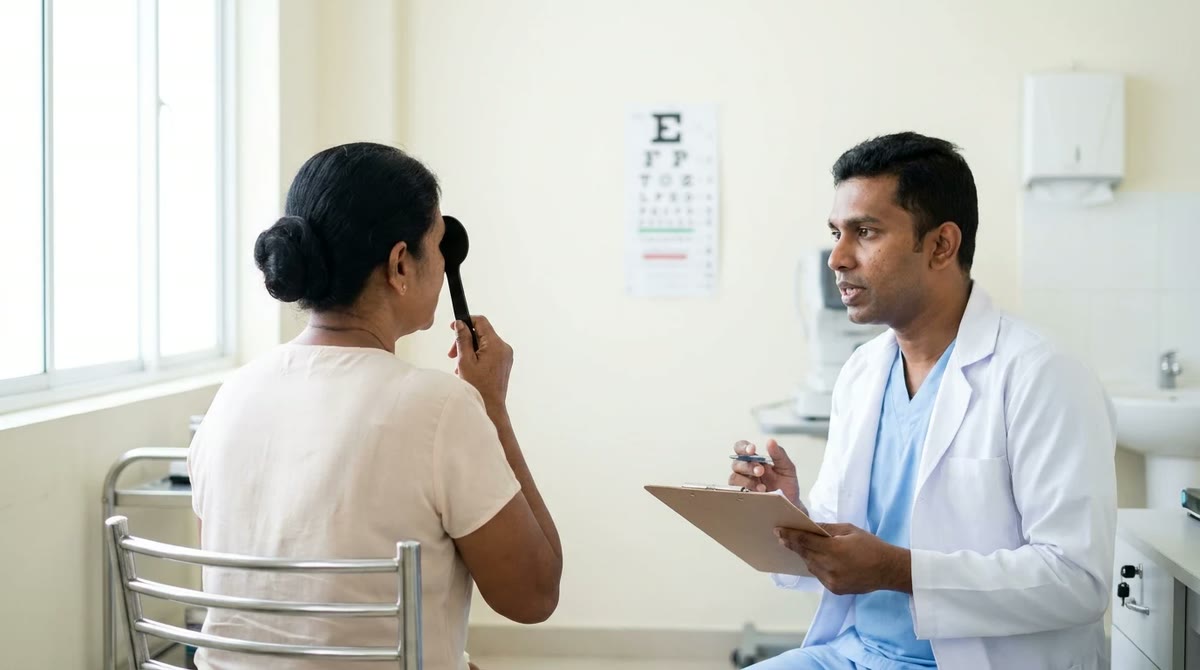
There is nothing to prepare for and nothing uncomfortable about it.
At the end of it you are told which of the four it is — and it can be more than one at the same time, which is common and worth knowing.
Most blur is gradual and can be seen to in the ordinary course of things. Some should not wait:
Any of those should be looked at straight away rather than at the next convenient appointment. If the eye is also red, which red eyes need seeing sets out what is urgent and what settles on its own.

Three of the four causes above are managed far more easily when they are found early, and two of them give you no symptom to act on in the stage where treatment does the most good. Waiting until the blur is bad enough to be annoying means arriving later than you needed to.
A full eye examination takes about twenty minutes. If your sight has changed, that is twenty minutes well spent — whichever of the four it turns out to be.
📞 Mount Lavinia: 0112 333 444 | Kurunegala: 0372 333 444


Specialist eye, ear, nose and throat care is coming to the Uva Province — the same care that families in Mount Lavinia and Kurunegala already trust, now in your own town.