Innovative
Cutting-edge Technology

Families tend to find out about glaucoma backwards. Somebody’s mother loses vision in one eye, the diagnosis is explained to the family at the hospital, and only then does anyone think to ask whether the rest of them should be checked.
By that point, a brother or a daughter may have had the same condition developing quietly for years.
Of everything that raises a person’s risk of glaucoma, a close relative who has it is the one that matters most — and it is also the easiest to act on, because you already know. If glaucoma is in your family, a glaucoma test is not something to think about eventually. It is something to book.
Glaucoma damages the optic nerve, the cable carrying sight from the eye to the brain. The structure of that nerve head, the drainage angle at the front of the eye and the way the eye handles pressure are all strongly inherited. If your parent’s eyes were built in a way that made them vulnerable, there is a reasonable chance yours were too.
What makes this worth acting on is the thing that defines glaucoma: it takes your vision from the edges inward, painlessly, and the brain hides the gaps. People do not notice early glaucoma. They notice late glaucoma. Why glaucoma has no warning signs explains how that happens.
So the family member who already has the diagnosis is, in a real sense, the warning the rest of the family gets. It is worth using.
Book a test if:
As a general guide, and with the examining consultant having the final say:
| Situation | When to start | How often |
|---|---|---|
| No family history, no other risk | From 40 | Every two years, unless advised otherwise |
| A close relative with glaucoma | From 35, or earlier if the relative was diagnosed young | Every year |
| Already told your pressure is raised | Now | As the consultant advises |
| Any sudden change in vision | Now | — |
The reason the family-history line starts earlier is simple: glaucoma found at the stage where it is doing no noticeable harm is a condition to be managed. Glaucoma found after it has taken peripheral vision is a different conversation, because sight already lost to glaucoma does not come back. Everything treatment does is aimed at protecting what you still have.
That is the honest reason to come early rather than a dramatic one.
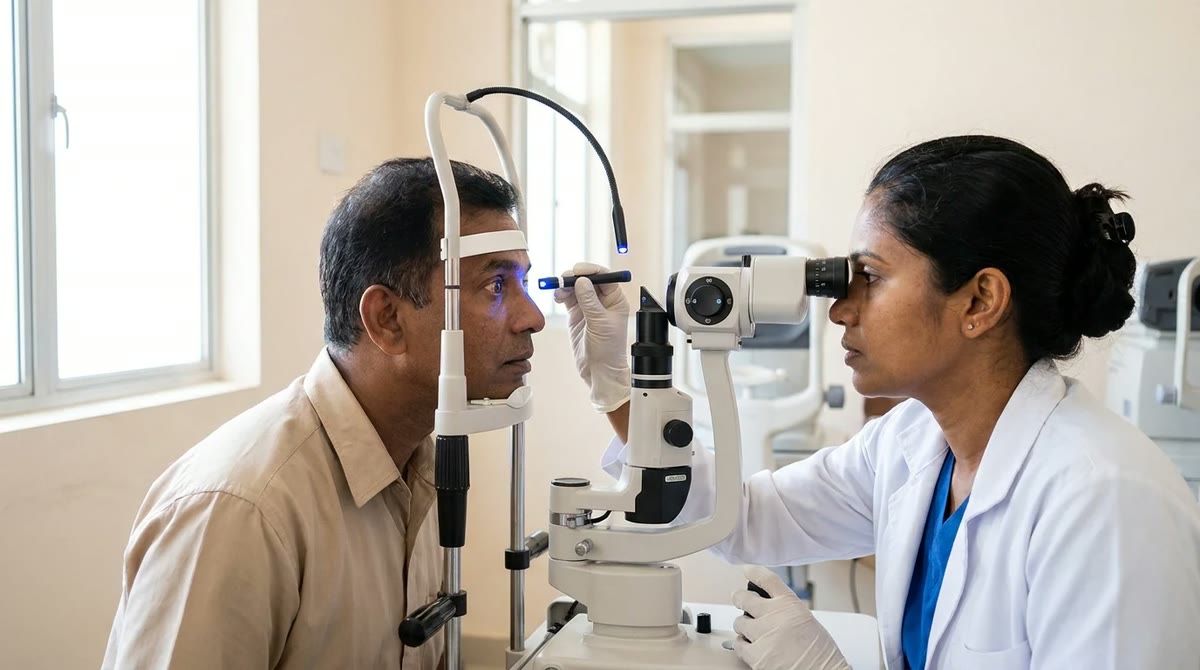
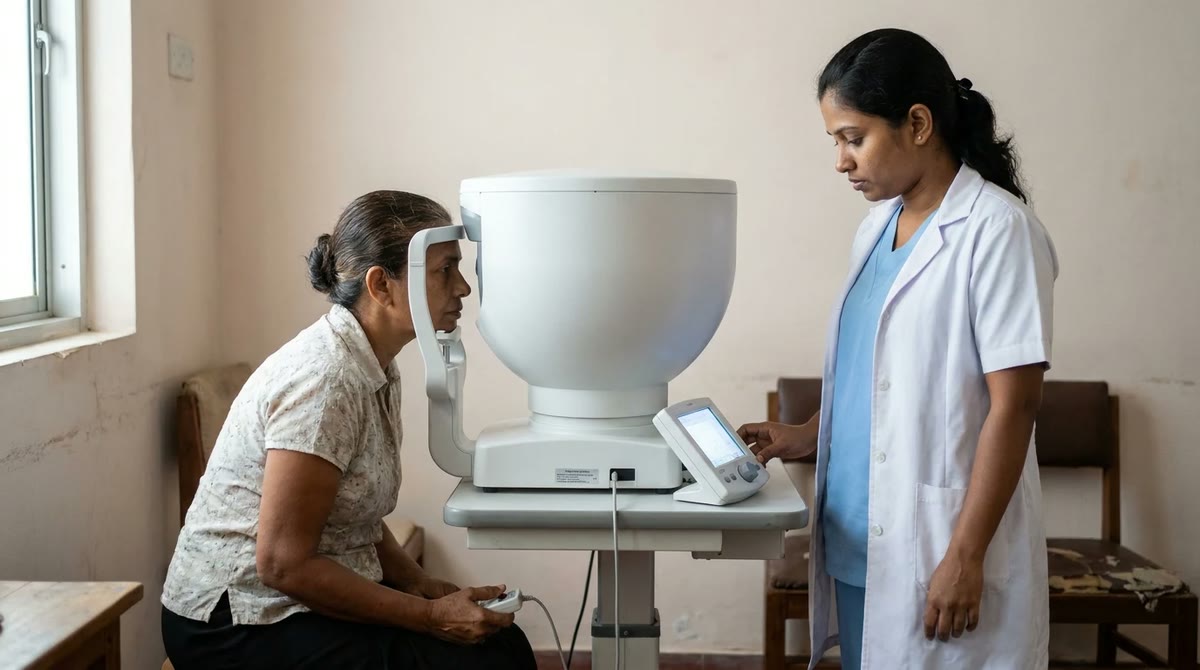
People put this off because they imagine something unpleasant. It is a straightforward outpatient examination, and nothing in it hurts.
Drops are sometimes used to widen the pupil so the nerve can be seen clearly. If so, your vision will be blurry and light-sensitive for a few hours afterwards — worth arranging a lift home and bringing sunglasses.
Finding glaucoma early is a good outcome, not a bad one. It means there is something to protect.
Most people begin with eye drops used daily to lower the pressure inside the eye. For some, a laser treatment is an option instead of or alongside drops — SLT laser or daily eye drops sets out how the two compare and who each one suits. The consultant decides which route fits the individual eye.
What does not change is the monitoring. Glaucoma is managed over years, not fixed in a visit, and the appointments that follow are the part that actually protects your sight.
You do not need symptoms, and with glaucoma you should not wait for them — by the time there are symptoms worth describing, the condition is no longer early. If a parent or a sibling has glaucoma, that is reason enough on its own.
A glaucoma test is an outpatient visit. Bring your current glasses, and your relative’s diagnosis if you know the details — it genuinely helps.
📞 Mount Lavinia: 0112 333 444 | Kurunegala: 0372 333 444


Specialist eye, ear, nose and throat care is coming to the Uva Province — the same care that families in Mount Lavinia and Kurunegala already trust, now in your own town.