Innovative
Cutting-edge Technology

Patients ask us a great deal about the operation and very little about the week that follows. Then they go home, something entirely ordinary happens — the eye waters, the light seems too bright, the vision is clear in the morning and hazy by evening — and they wonder whether it is supposed to be like that.
Usually it is. Here is what the first week genuinely looks like, so you can tell the ordinary from the thing worth ringing about.

You go home the same day. Someone else drives.
The eye is usually covered with a shield at first, and when it comes off things are rarely crisp straight away. Vision is often milky or filmy, as though you are looking through a steamed window. Colours can seem oddly cold or blue — this surprises people, and it is simply the brain adjusting after years of looking through a lens that had yellowed without you noticing.
The eye may water, feel scratchy, or feel as though there is grit in it. There may be some redness. All of this is familiar territory in the first day or two.
Sleep on your back or on the opposite side that first night, and leave the shield on exactly as you were told.
This is when most of the improvement happens, and when most of the worrying happens too.
Vision usually sharpens noticeably, but it rarely does so smoothly. It is common for sight to be better in the morning and hazier by evening, or clear one hour and soft the next. That fluctuation settles over the following days.
The gritty feeling eases. The redness fades. Most people are startled by how much brighter and more colourful everything looks, particularly whites — a white wall or a white shirt can look almost luminous at first.
What you can do: watch television, use your phone, read if it is comfortable, walk about the house, go up and down stairs, eat normally. None of this harms the eye.
What to leave alone: do not rub or press the eye, do not let soap or shampoo run into it, keep away from dust and smoke, and skip swimming entirely for now.
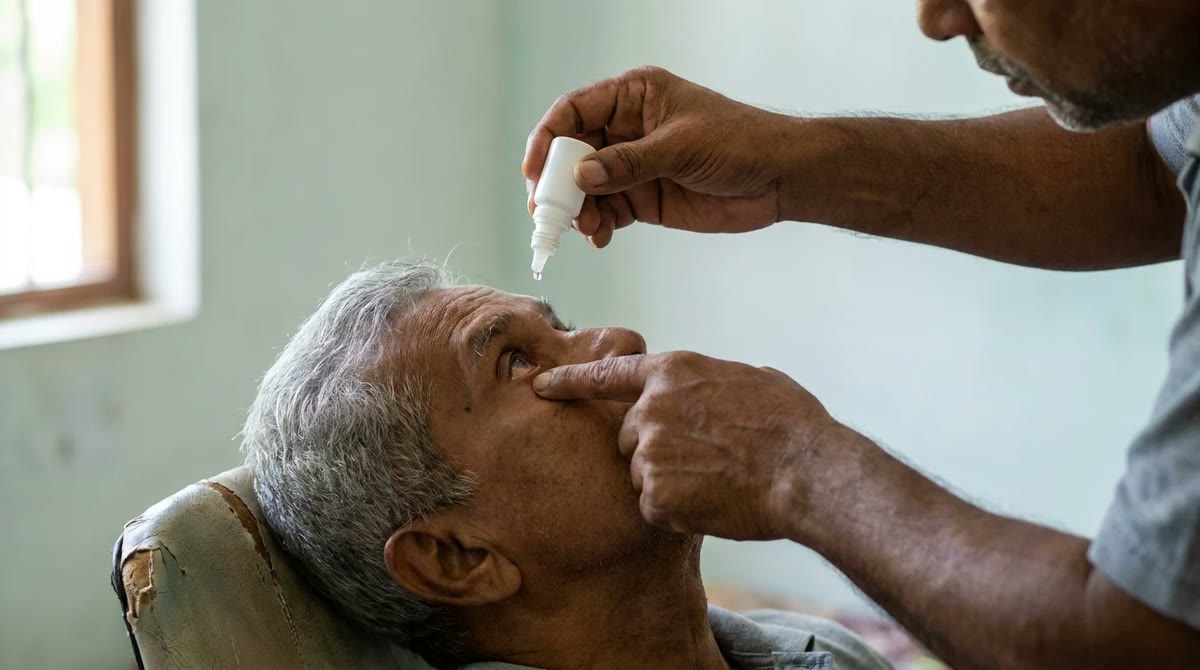
The drops are the part that matters most, and the part most often got wrong.
You will be sent home with more than one bottle, on a schedule that reduces over several weeks. The schedule exists to control inflammation and prevent infection, and stopping early because the eye feels fine is the single most common mistake patients make. The eye feeling fine is what the drops are doing.
A few things that help:
By the end of the first week most people are doing almost everything they did before.
Reading and screens are fine throughout. Light housework and short walks are fine. Many people are reading comfortably within days — though if your glasses now feel wrong, that is expected, and the prescription is usually left to settle before new lenses are made up. Your consultant will say when.
Hold off on heavy lifting, bending with your head below your waist, gardening, dusty work and swimming until you are told otherwise. Driving waits until your consultant confirms your vision meets the standard.
If you are having the second eye done, your consultant will have explained the interval and the reason for it — how surgery is planned across both eyes covers that.
Ordinary in the first week:
Call the hospital, the same day, if you have:
None of these is common. All of them are worth a phone call rather than a wait-and-see. Nobody at either branch minds the call — we would far rather hear from you on the day.
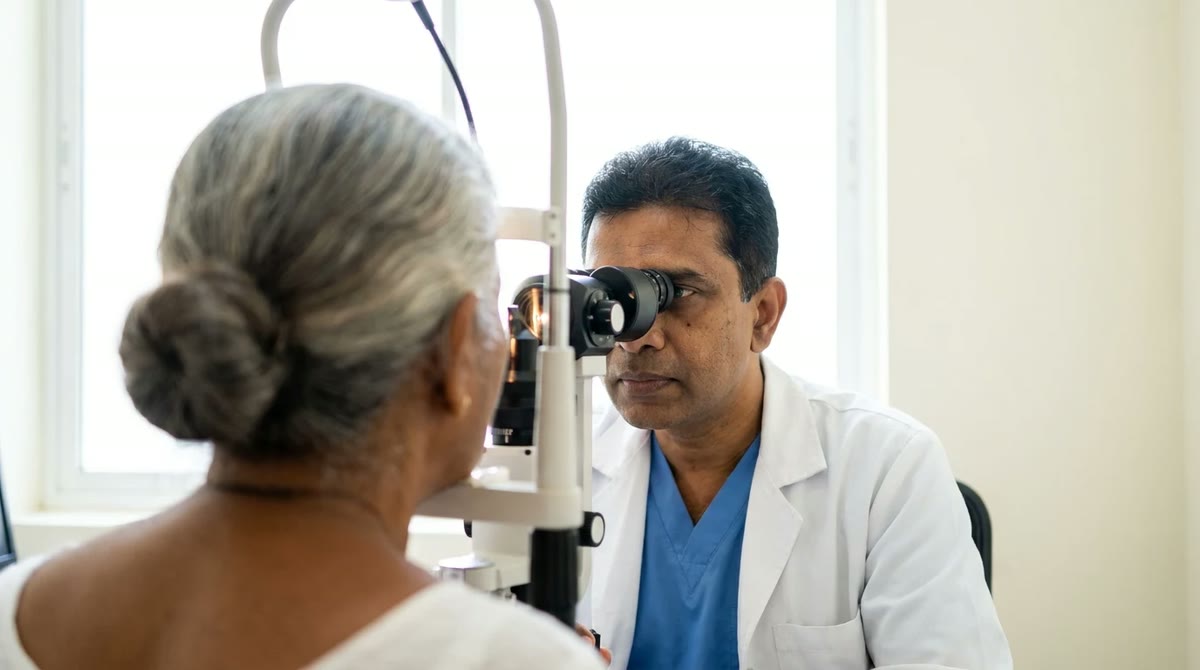
The follow-up visit is not a formality. It is where the eye is examined properly, the pressure checked, the drops adjusted and the healing confirmed. Patients who feel well sometimes skip it, and that is the one appointment not to skip.
If you would like the background on the procedure itself, how safe cataract surgery is covers what is actually involved, and ten questions patients ask us every day answers most of what comes up beforehand.
Anything you are unsure about in the days after your surgery — ring us. That is what the number is for.
📞 Mount Lavinia: 0112 333 444 | Kurunegala: 0372 333 444


Specialist eye, ear, nose and throat care is coming to the Uva Province — the same care that families in Mount Lavinia and Kurunegala already trust, now in your own town.