Innovative
Cutting-edge Technology

Every week, patients sit across from our surgeons holding the same worries — often apologizing for asking “silly questions.” There are no silly questions about your eyes. These are the ten cataract surgery questions we answer most often, with the honest, complete answers we give in the consultation room.

No. This is the number one fear, and the answer is genuinely reassuring. Before surgery we numb your eye completely, usually with anesthetic drops and occasionally with a small injection near — not into — the eye. During the procedure most patients report feeling nothing beyond light pressure or a sensation of water. Afterwards, some grittiness or mild irritation for a few days is normal, and the drops we prescribe manage it. Genuine pain after cataract surgery is unusual, and if it happens we want to see you promptly.
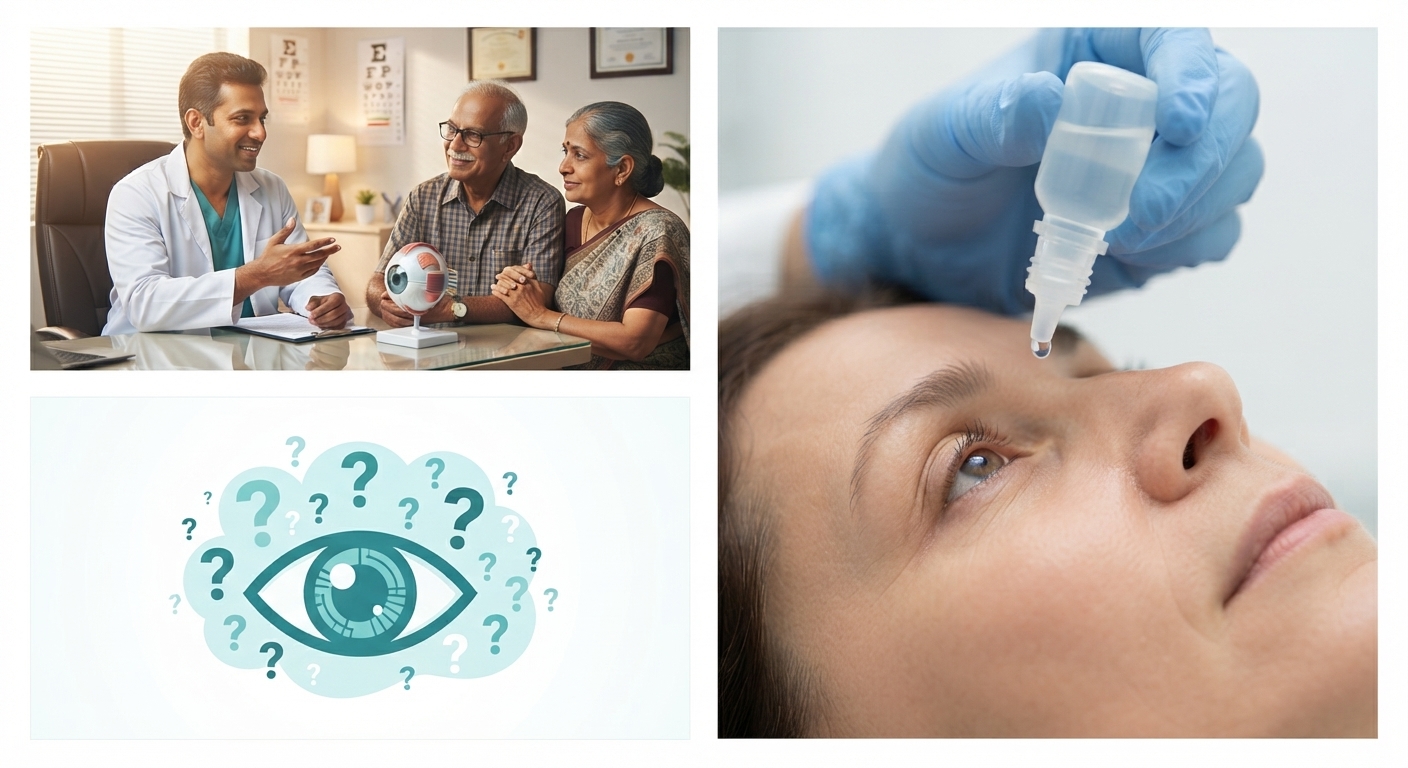
Usually yes, and it is much less strange than it sounds. You rest comfortably, sometimes lightly sedated. Here is what surprises everyone: you do not see the surgery happening. The microscope light fills your vision, so most patients describe only brilliant light and soft moving colors. You can hear the surgeon, and the team talks to you throughout. Many patients tell us afterwards, “That was it?”
The surgery itself typically takes 15 to 30 minutes per eye. Your full time at the hospital on surgery day is a few hours: preparation, dilating drops, the procedure, and a short recovery period before you go home.
No. Modern cataract surgery is a day procedure. You leave the same day with a protective eye shield and clear instructions. You will need someone to accompany you home, because you cannot drive on surgery day.
Many patients notice brighter vision and more vivid colors within a day or two, though some blurriness in the first days is completely normal while the eye settles. Vision typically keeps sharpening over the following weeks. We issue your final glasses prescription, if you need one, once the eye has fully stabilized.
Standard practice is to operate one eye at a time, usually a few weeks apart. There are two good reasons. First, the operated eye begins healing while your other eye keeps you functioning day to day. Second — and few patients know this — your surgeon can use the visual outcome of the first eye to fine-tune the lens implant calculation for the second eye, which improves your overall final result.
No, never. Your surgeon physically removes the cloudy natural lens and replaces it with an artificial one, so nothing remains that could turn cloudy again. What can happen, months or years later, is clouding of the thin natural capsule that holds your implant, called posterior capsule opacification. It affects some patients, and a painless laser procedure in the clinic clears it in minutes. One session, permanent fix — not a repeat surgery.
It depends largely on the lens implant you choose. A standard monofocal lens gives excellent clear vision at one distance; most patients choose distance and use reading glasses for close work. Premium options (multifocal, extended-depth, toric for astigmatism) can reduce your dependence on glasses across more distances. At your assessment we explain honestly what your eyes suit — not every eye is a good candidate for every lens, and we will tell you so.
These conditions are extremely common among cataract patients, and surgeons routinely operate safely alongside them. What matters is control and preparation: we review your health and medications during assessment, coordinate with your physician where needed, and for diabetic patients we examine the retina carefully, since diabetes can affect the back of the eye separately from the cataract — which is why your yearly diabetic eye screening still matters. Being elderly is not a barrier either: cataract surgery is one of the most common operations performed for patients in their 70s, 80s and beyond.
Faster than most people expect. Light daily activities — walking, watching TV, eating normally, gentle housework — typically resume within a few days, and you can read as comfort allows. Most patients return to office-type work within about a week. Your surgeon will personally guide the bigger milestones: driving once your vision meets the standard and you feel confident, plus heavy lifting, swimming and dusty environments, which wait a little longer to protect the healing eye. You will get a clear, written do-and-don’t list, so there is no guesswork.
All ten of these cataract surgery questions really come down to one. What patients are really asking is: “Will I be okay?” And the honest answer is that cataract surgery is one of the safest, most practiced and most life-improving procedures in all of modern medicine. The NHS guidance on cataract surgery says much the same. In fact, fear of the surgery keeps far more people living with poor vision than the surgery itself ever justifies.
Those are the cataract surgery questions we hear most. If you want the longer version, read how safe cataract surgery really is, or see why patients across Sri Lanka choose Mount Lotus.
Have other cataract surgery questions we did not cover? Ask a surgeon directly — book a cataract consultation at Mount Lotus Eye & ENT Hospital, Mount Lavinia or Kurunegala.
Mount Lavinia: 0112 333 444 | Kurunegala: 0372 333 444


Specialist eye, ear, nose and throat care is coming to the Uva Province — the same care that families in Mount Lavinia and Kurunegala already trust, now in your own town.