Innovative
Cutting-edge Technology

Most people first hear the word in a doctor’s room, and most leave still unsure what it means. Some picture a film growing over the eye. Others think it is a kind of blindness, or that it spreads from one eye to the other. None of that is right.
A cataract is simpler, and far less frightening, than the word suggests. Here is what it actually is.
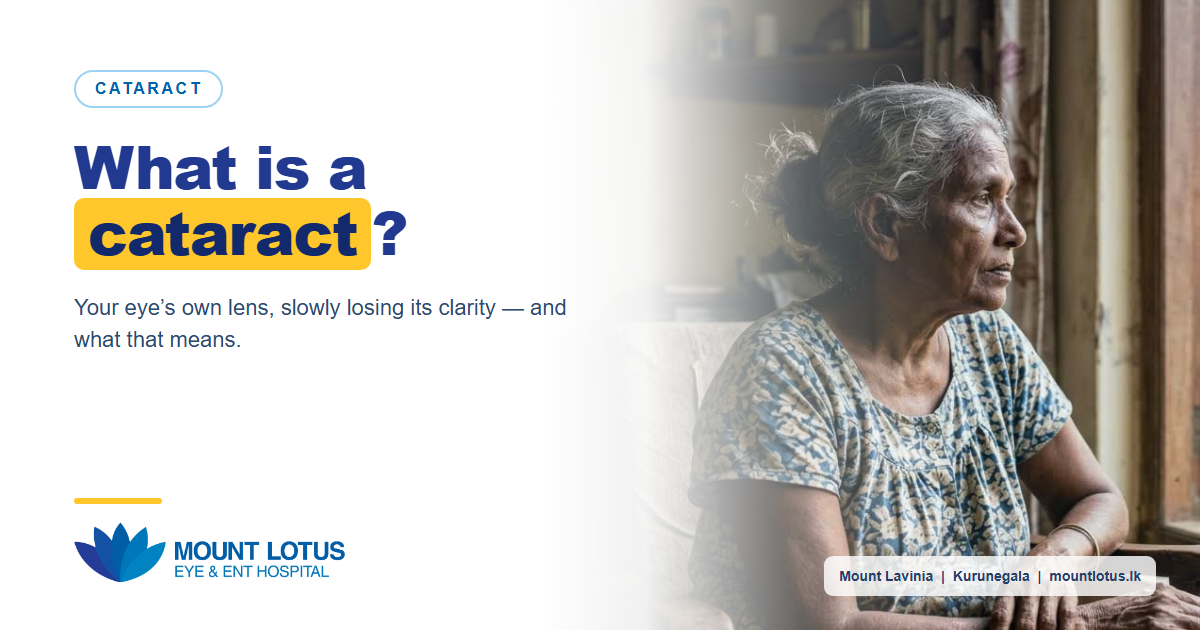
Behind the coloured part of your eye sits a small, clear lens about the size of a lentil. Its job is to focus light onto the retina at the back of the eye, the way a camera lens focuses an image onto a sensor. For that to work, the lens has to stay transparent.
That lens is made mostly of water and protein, arranged in a precise order that lets light pass straight through. Over the years those proteins begin to clump together. The lens slowly loses its clarity, and light scatters instead of focusing cleanly.
That clouding is the cataract — ඇසේ සුද in Sinhala. It is not a growth, not a skin, not something on the surface of your eye, and nothing you can see by looking in a mirror. It is the lens itself, changing.
Ageing is by far the most common cause. If you live long enough, some clouding is close to inevitable — which is why cataract is one of the leading causes of poor vision worldwide, and also one of the most treatable.
Several things can bring it on earlier or make it progress faster:
It is not caused by reading in poor light, by using your eyes too much, or by watching screens. Those are the explanations people reach for, and none of them is the reason.
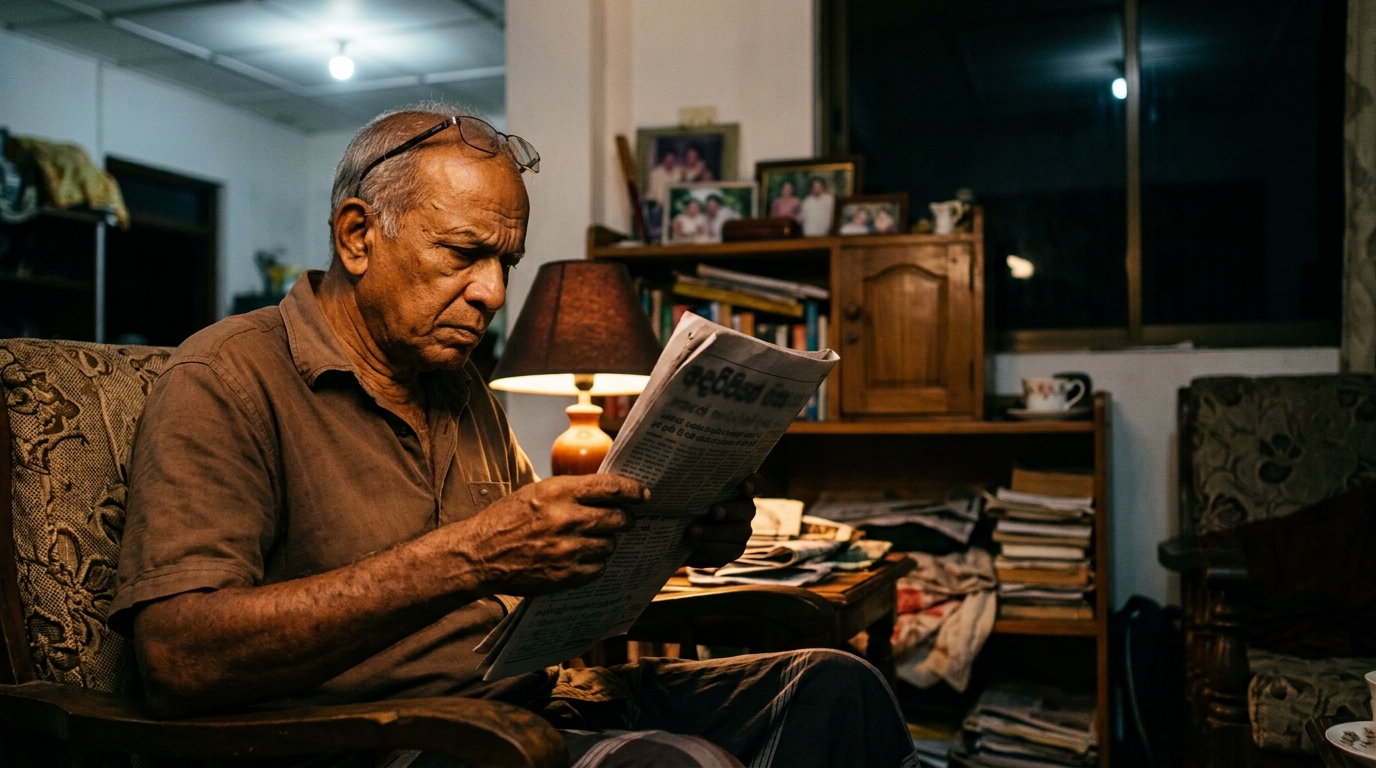
A cataract takes nothing suddenly. It dims things so gradually that most people adjust without noticing, which is why so many are surprised at how much they had lost once it is treated.
The changes that bring people in are usually these:
If several of those sound familiar, that is worth an appointment rather than a wait.
It is not glaucoma. People mix the two constantly. Glaucoma is damage to the optic nerve, usually linked to pressure inside the eye, and it takes sight in a completely different way — silently, from the edges inward. The two are unrelated conditions, and a person can have both.
It does not spread from one eye to the other. Most people develop cataracts in both eyes simply because both eyes are the same age, not because one infected the other.
And it is not a form of blindness. Left untreated for many years it can take most of your useful sight, but the lens can be replaced.

Nothing reverses a cataract. No eye drop, vitamin, supplement or exercise has ever been shown to clear a clouded lens, whatever the advertisement says. Once the proteins have clumped, they stay clumped.
What you can reasonably do is avoid speeding it up: wear sunglasses that block UV, stop smoking, and if you have diabetes, keep it as well controlled as your doctor advises. Those measures protect the rest of your eye too.
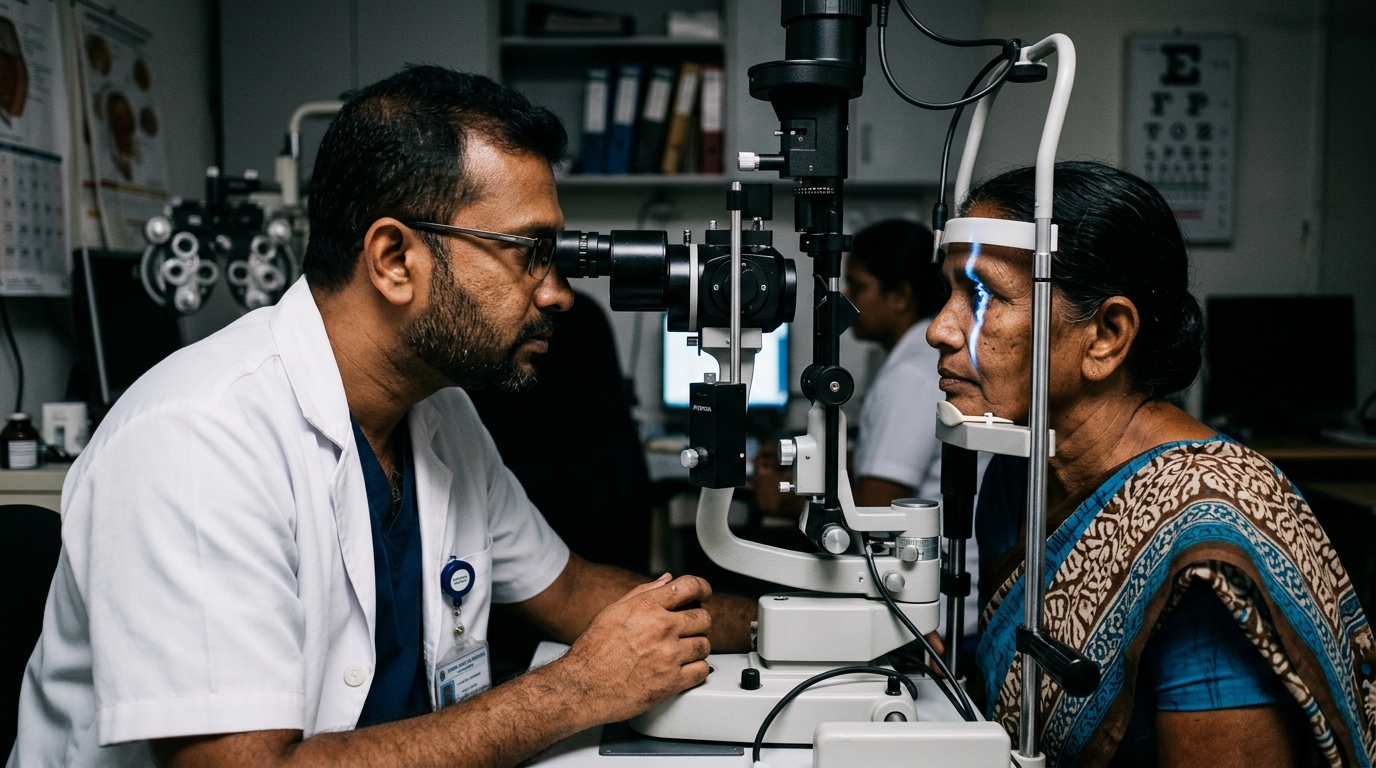
By looking at the lens. At a cataract checkup we measure your vision, put in drops to widen the pupil, and examine the lens under magnification. If surgery is on the table, precise scans measure the eye so the right replacement lens can be calculated — the artificial lens that will take over the job your own lens has stopped doing.
There is no blood test for it and no scan you can buy in a pharmacy. Cataracts treatment starts with somebody looking into your eye.
The whole visit takes about an hour, and none of it hurts. The drops blur your near vision for a few hours afterwards, so bring someone to drive you home and bring sunglasses.
Not at a particular reading on a chart, and not when someone tells you it is “ripe” — that idea belongs to surgical techniques that have been obsolete for a generation.
The honest answer is that it needs treating when it starts interfering with your life: when you have stopped driving after dark, when reading needs a second lamp, when you have quietly given up something you used to enjoy. We write about why waiting makes the operation harder separately, because that is the part most people underestimate.
If the surgery itself is what worries you, we have answered the ten questions patients ask us every day and explained how safe the modern procedure actually is. If both eyes are affected, we plan them one at a time and there is a good reason for that. And if you live with diabetes, pair the cataract check with your yearly diabetic eye screening — they look at different parts of the same eye.
A cataract is your eye’s own lens losing its clarity with time. It is extremely common, it is nobody’s fault, it cannot be reversed by drops — and it is one of the few causes of failing sight that can be properly fixed.
The only thing it asks of you is that you find out where you stand.
Book a cataract assessment at Mount Lotus Eye & ENT Hospital — Mount Lavinia or Kurunegala. About an hour, and you will know exactly what you are dealing with.
📞 Mount Lavinia: 0112 333 444 | Kurunegala: 0372 333 444


Specialist eye, ear, nose and throat care is coming to the Uva Province — the same care that families in Mount Lavinia and Kurunegala already trust, now in your own town.