Innovative
Cutting-edge Technology

Most blocked noses resolve in a week or two. Some do not. If you have spent months reaching for the same nasal spray, sleeping badly and never quite breathing freely, you are probably dealing with something other than a lingering cold.
So here is the practical version.

The sinuses are air-filled spaces in the bones around your nose and eyes. They are lined with tissue that produces mucus and drains it into the nose through narrow openings.
When that lining stays swollen, the openings block, mucus collects, and the cycle sustains itself.
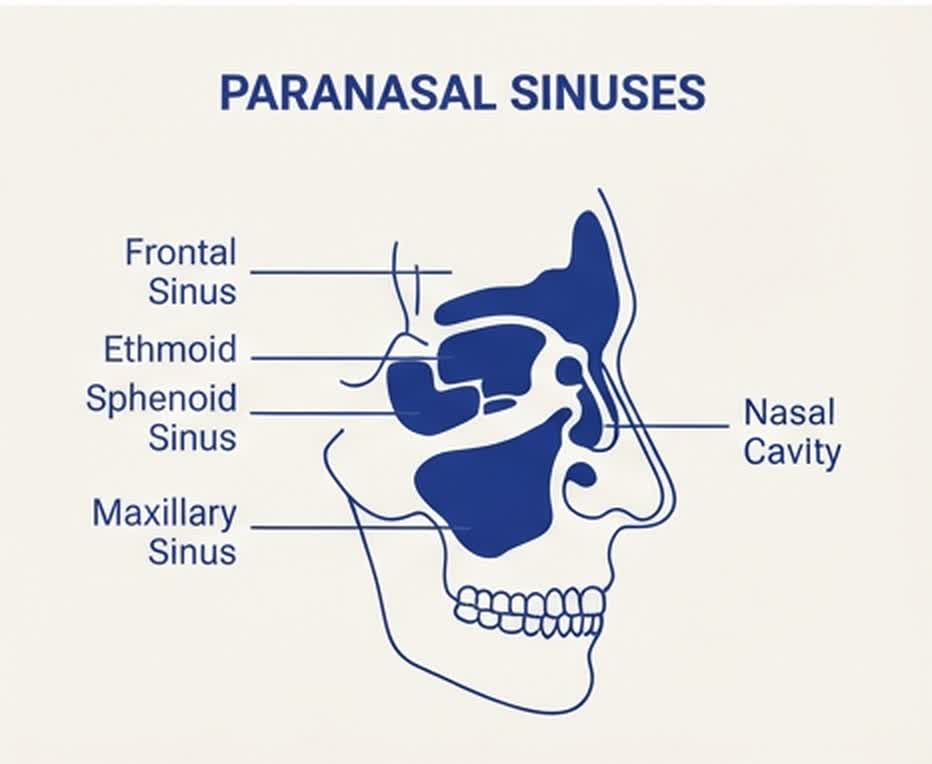
Doctors draw a practical line at twelve weeks. Symptoms lasting longer than that are treated as chronic sinusitis rather than a passing infection — and it is managed differently.
It usually involves several of these together:
Facial pain is common but not universal. In fact, plenty of people have significant sinus disease with pressure rather than pain.
Allergy. Dust mite and pollen allergy keeps the lining inflamed year-round. Very common here, and often untreated.
Nasal polyps. Soft, non-cancerous swellings that grow from inflamed lining and physically block airflow. They also tend to reduce smell markedly.
A deviated septum. The wall between the nostrils sits off-centre, narrowing one side. Some people are born with it; others acquire it after an injury.
Repeated infection. Each episode leaves the lining more inflamed than before.
Overused decongestant sprays. This one catches people out. Sprays that shrink the lining work well for a few days — then the nose rebounds and blocks worse than before, so you use more. However, if you have been using one for weeks, it may now be part of the problem rather than the solution.
Book an appointment with an ENT doctor if:
That one-sided blockage point matters. Chronic sinusitis usually affects both sides, so a persistent block on one side alone deserves a proper look.

An ENT consultation for sinus problems is straightforward. The ENT surgeon examines the nose using a thin endoscope — uncomfortable for a moment, not painful — which shows the drainage passages, any polyps and the position of the septum. A CT scan is sometimes needed to map the sinuses before deciding on treatment.
Medical treatment comes first, and often resolves it: saline rinses, steroid nasal sprays used correctly and for long enough, allergy treatment, and antibiotics only where genuinely indicated.
Technique matters more than people expect. Meanwhile, most patients using a steroid spray have never been shown the correct angle, which is why it appears not to work.
Surgery is considered when medical treatment has been given a fair trial and symptoms persist — usually to open blocked drainage pathways, remove polyps or straighten a deviated septum. It is normally day surgery.
Constant nasal blockage is not something to accept as your normal. It disrupts sleep, dulls taste and smell, and grinds down your energy — and in most cases it is treatable without surgery once the actual cause is identified.
If it has been going on for months, get it looked at properly by an ENT specialist.
Mount Lotus Eye & ENT Hospital — ENT specialists at Mount Lavinia & Kurunegala. Open daily 7am–8pm.
📞 Mount Lavinia: 0112 333 444 | Kurunegala: 0372 333 444


Specialist eye, ear, nose and throat care is coming to the Uva Province — the same care that families in Mount Lavinia and Kurunegala already trust, now in your own town.