Innovative
Cutting-edge Technology

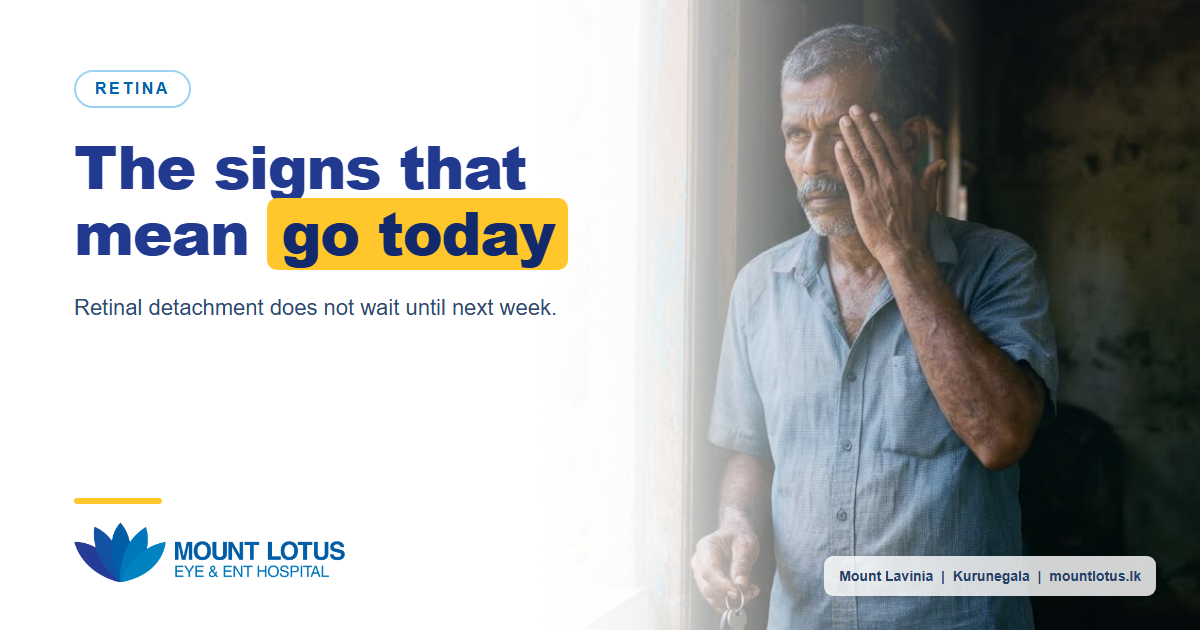
Most eye problems can wait until a convenient appointment. Retinal detachment is the one that cannot, and almost nobody is told how to recognise it until it has already happened.
So here is the practical version.
The retina is the light-sensitive layer lining the back of the eye. It works only while it stays in contact with the tissue beneath it, which supplies its blood.
In a detachment, fluid gets underneath and lifts the retina away. Starved of blood supply, those cells stop working — and after long enough, they stop recovering. That is why the clock matters so much here.
These are the symptoms that mean an eye examination the same day:
The curtain is the sign people describe afterwards. However, flashes and a sudden burst of floaters usually come first — and that earlier stage is when treatment is simplest.
A retinal tear, caught before the retina lifts, can often be sealed with laser in the clinic in minutes.
Once the retina detaches, the treatment becomes surgery. And once the detachment reaches the central part of the retina — the part you read and recognise faces with — some loss of sharpness usually remains even after successful repair.
So the same condition, days apart, means either a short laser session or an operation with a permanently different outcome. Nothing about waiting improves it.
Short-sighted people. A longer eye means a thinner, more stretched retina. The higher the prescription, the higher the risk.
Anyone who has had cataract surgery, where risk rises modestly for some years afterwards.
People over fifty, as the gel inside the eye naturally shrinks and pulls on the retina.
Anyone with a previous detachment, in either eye.
A family history of retinal detachment.
After a significant eye injury, sometimes weeks or months later.
Being in one of these groups does not mean it will happen. It means the symptoms above deserve a lower threshold for getting checked.
The pupils are dilated with drops, which take around twenty minutes to work, and the retina is then examined all the way to its edges with a bright light and lens. Scans may be added where the view is limited.
The examination itself is painless. Your near vision will be blurred for several hours afterwards and light will feel harsh, so bring sunglasses and arrange not to drive yourself home.
If a tear is found without detachment, laser treatment is often done the same visit.
One or two floaters that have drifted around for years are ordinary. A sudden change is not.
New flashes, a sudden swarm of floaters, or a shadow creeping across your vision means today — not a convenient appointment next week. In fact, the whole reason this post exists is that the difference between those two decisions is often the difference between laser and surgery.
If you notice these signs outside clinic hours, go to the nearest eye casualty rather than waiting for morning.
Mount Lotus Eye & ENT Hospital — Mount Lavinia & Kurunegala. Retina unit and eye casualty, open daily 7am–8pm.
📞 Mount Lavinia: 0112 333 444 | Kurunegala: 0372 333 444


Specialist eye, ear, nose and throat care is coming to the Uva Province — the same care that families in Mount Lavinia and Kurunegala already trust, now in your own town.