Innovative
Cutting-edge Technology

Walk into any eye clinic in Sri Lanka and you will hear the same phrase several times a day: "ඇහැට ප්රෙෂර් එනවා." Pressure in the eye.
Almost everyone who says it is worried about the right thing. Almost nobody means what they think they mean.
So let us clear up the single most common misunderstanding in eye care first.
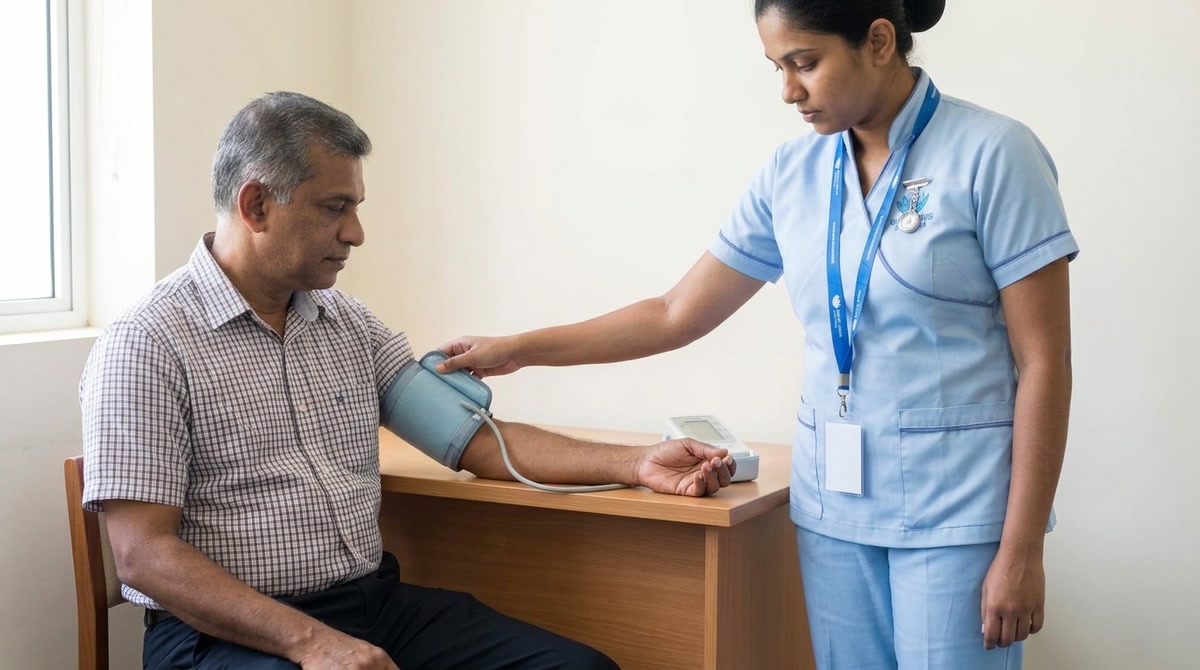
This is the one that matters, so it goes first.
Eye pressure and blood pressure are two separate measurements of two separate things. Taking tablets for high blood pressure does not lower the pressure inside your eye. Having perfectly normal blood pressure does not mean your eye pressure is fine.
We meet patients every month who assumed the opposite — who believed that because their physician had their blood pressure under control, their eyes were covered. They were not.
Your eye is not hollow. It is filled with a clear fluid that your body makes continuously, circulates through the front of the eye, and drains away through a mesh of tissue near the edge of the iris.
Production and drainage are meant to balance. Fluid in, fluid out, pressure steady.
When the drainage channel stops working as well as it should, fluid leaves more slowly than it arrives. The eye cannot expand to make room, so the pressure inside it rises. That is the pressure everybody is talking about.
Think of a sink with the tap running and the drain partly blocked. The tap is not the problem. The drain is.
Raised pressure on its own is not the disease. What it does is the disease.
At the back of your eye, the optic nerve carries everything you see to your brain. It is made of roughly a million fibres, and it does not regenerate. Sustained pressure damages those fibres, a few at a time, from the outer edges inward.
When that damage is established, the condition has a name: glaucoma.
The lost fibres do not come back. This is the hard part of glaucoma and the reason the whole subject matters: treatment protects what you still have, it does not restore what has gone.
The common form of glaucoma produces no pain, no redness, and no blurring in its early years. The pressure is not high enough to hurt — only high enough to damage.
And because the damage starts at the outer edges of your vision, your brain fills in the gaps with information from the other eye. People routinely lose a substantial share of their peripheral vision before they notice anything is wrong at all.
There is no way to judge your own eye pressure by how your eyes feel. It has to be measured.
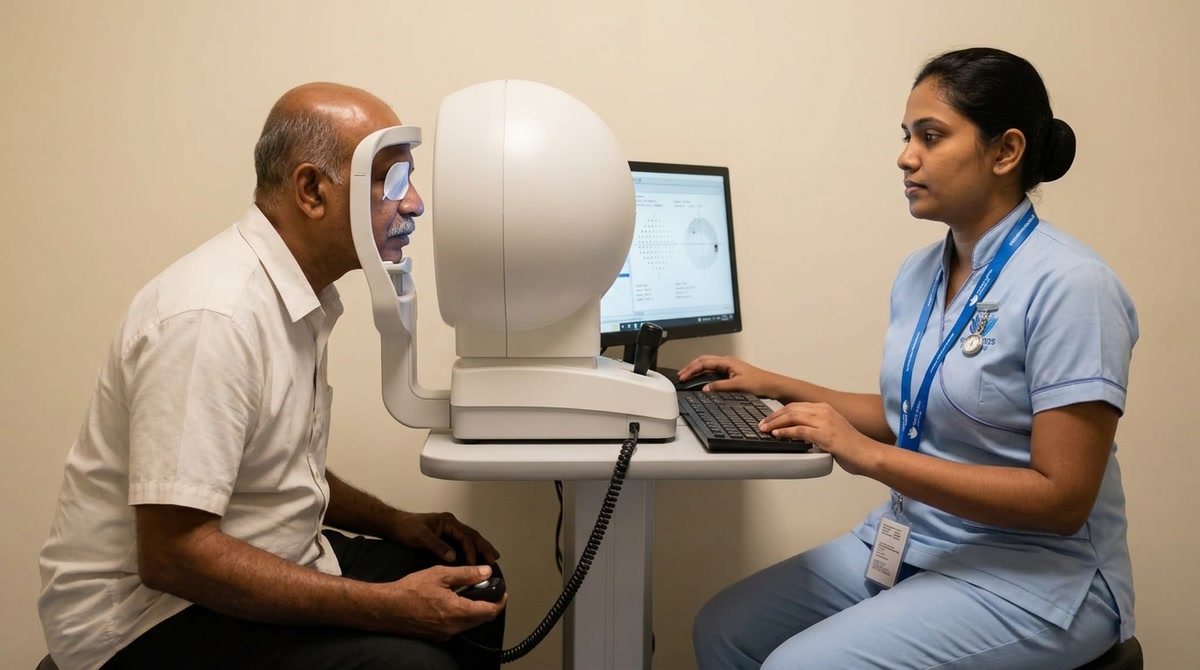
Quickly, and without any discomfort worth worrying about. A numbing drop goes in, and an instrument touches the surface of the eye for a moment, or a puff of air does the same job without contact. You will be told the number before you leave the room.
A sensible assessment does not stop at the number. Your eye pressure can read normal and your optic nerve can still be under strain, so we examine the nerve head itself and, where it is warranted, map your field of vision to see whether anything has already been lost. One measurement is a snapshot. The picture is what matters.
Ask for your eye pressure to be measured as part of a routine eye examination if any of these apply:
If none of these apply, it still belongs in the general eye check you should be having anyway.
Nothing dramatic happens next. Raised pressure is managed, and the aim is always the same — bring it down far enough to stop further damage to the nerve.
Daily drops are the usual starting point and work well for many people. The practical difficulty is not the medicine but the routine: every day, at the same time, for life. We have written separately about laser treatment as an alternative to daily drops, which is the question most patients ask once they realise what "for life" means. Where drops and laser are not enough, there is surgery.
Your consultant will tell you which of those fits your eye. What none of them does is undo damage already done, which is the whole argument for measuring early rather than late.
Glaucoma is not a cataract. People mix them constantly, partly because both arrive with age and both affect sight.
A cataract is the eye’s own lens turning cloudy, and it is fixable — the lens is replaced. Glaucoma is nerve damage, and it is not reversible. The two are unrelated, and a person can have both at once.
If you live with diabetes, there is a third thing to keep in view: your yearly diabetic eye screening looks at the retina, which is a different part of the eye again.
"Eye pressure" is the fluid pressure inside your eye. It is not your blood pressure, your blood pressure tablets do not treat it, and you cannot feel whether it is high.
It takes a few minutes to measure. Everything that makes glaucoma frightening comes from finding it late.
Ask for your eye pressure to be measured at your next eye examination at Mount Lotus Eye & ENT Hospital — Mount Lavinia or Kurunegala.
📞 Mount Lavinia: 0112 333 444 | Kurunegala: 0372 333 444


Specialist eye, ear, nose and throat care is coming to the Uva Province — the same care that families in Mount Lavinia and Kurunegala already trust, now in your own town.